
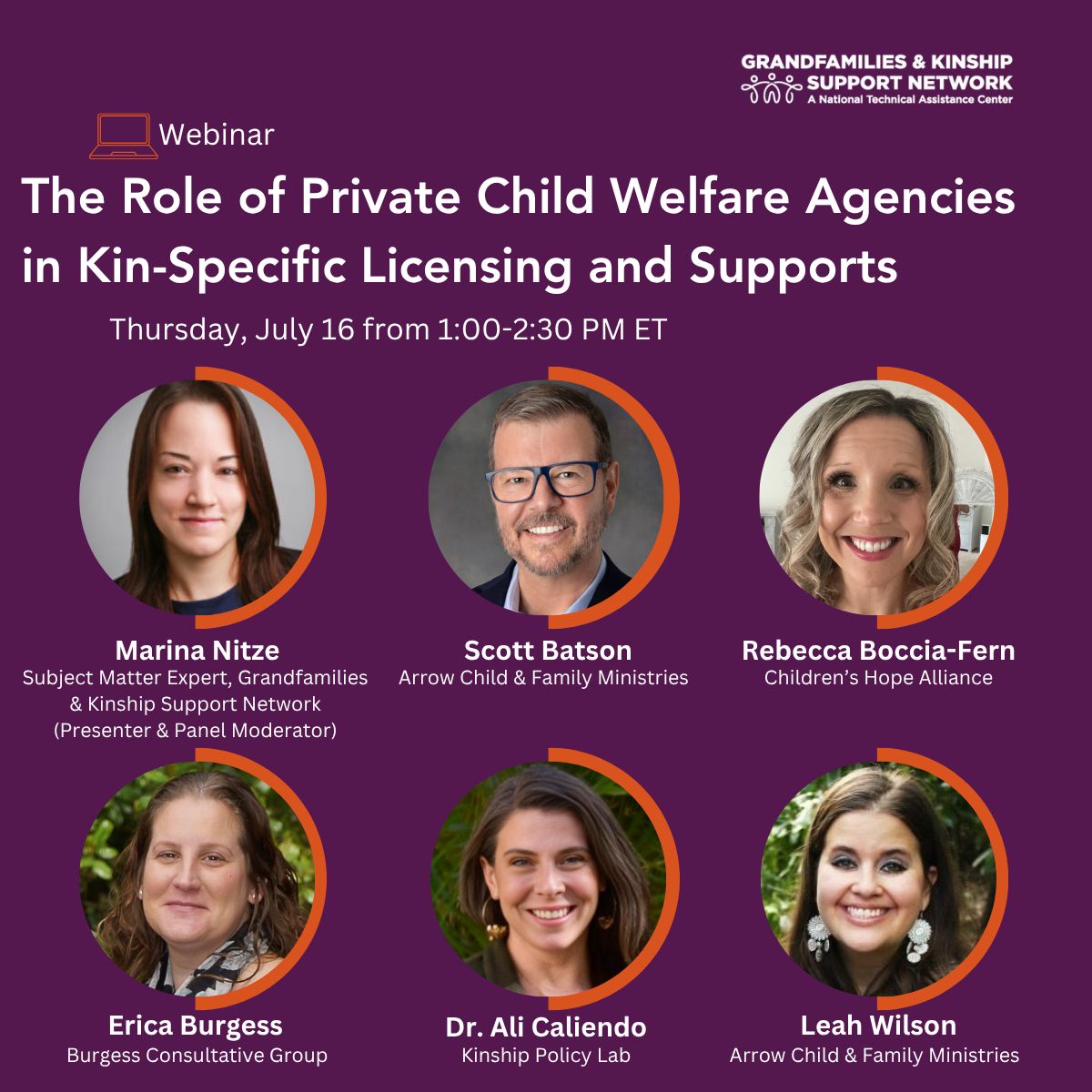
Arrow Child and Family Ministries’ Associate Vice President of Capacity Scott Batson and Director of Kinship Leah Wilson will represent the organization on a nationwide stage as featured panelists for the Grandfamilies and Kinship Support Network.
The national webinar, titled “The Role of Private Child Welfare Agencies in Kin-Specific Licensing and Supports,” is Thursday, July 16 at 1 p.m. The panel will feature agencies discussing how they support relative caregivers amid shifts toward kin-specific foster care licensing standards.
Arrow has operated under Texas’ new kin-specific licensing framework since it took effect in late 2025. Today, Arrow’s Texas foster care program serves 841 children, with more than one-third placed in kinship homes. Additionally, approximately 65% of all families seeking licensure through Arrow are kinship caregivers.
Batson, who has spent nearly 30 years in the child welfare landscape, said the invitation to the panel carries both honor and responsibility.
“Throughout that time one truth has remained constant, children do better when they can safely remain connected to their family,” Batson said. “The new kin-specific licensing standards acknowledge that kinship families are different from traditional foster families and deserve a process that reflects those differences.”
Batson noted that the goal of the national conversation is changing the question from “How do we make relatives fit our system?” to “How do we build a system that supports relatives?”
“Across the country, we’re seeing a greater recognition that families are one of our greatest resources, not obstacles to overcome,” Batson said. “National conversations like this allow us to learn from one another, celebrate innovation and continue improving the way we serve children and caregivers.
During the panel, Batson and Wilson plan to share practical, operational strategies Arrow utilized to build a kin-first culture. These strategies include conditional licensing, specialized kinship staff, streamlined processes and customized training designed for relative caregivers.
Wilson will offer a perspective built on direct practice and systems-level leadership, having worked directly with kinship families while shaping statewide licensing processes in Texas.
“Most relatives never planned to become caregivers, they step in during a family crisis out of love and commitment to a child,” Wilson said. “When licensing is approached as a partnership rather than simply a checklist, it becomes an opportunity to equip caregivers with the training, resources and support they need to be successful.”
Wilson added that investing in kinship families expands networks of committed caregivers, increases permanency and preserves vital community connections.
“Every improvement we make to the process has the potential to help another child remain safely connected to the people who know and love them,” Wilson said.
Batson and Wilson share the sentiment that when teams collaborate and keep children and families at the center of every decision, systems become more effective and compassionate.
Arrow is grateful to the Grandfamilies & Kinship Support Network for creating a space where public agencies, private providers, advocates and caregivers can come together around a shared goal.
Generations United Grandfamilies and Kinship Support Network recently designated Arrow a ‘nationally exemplary kinship practice.’ A designation which recognizes the organization’s commitment to keeping children with family and the intentional design of Arrow’s Kinship Straight Adopt (KSA) program.
Learn more about the program here.