
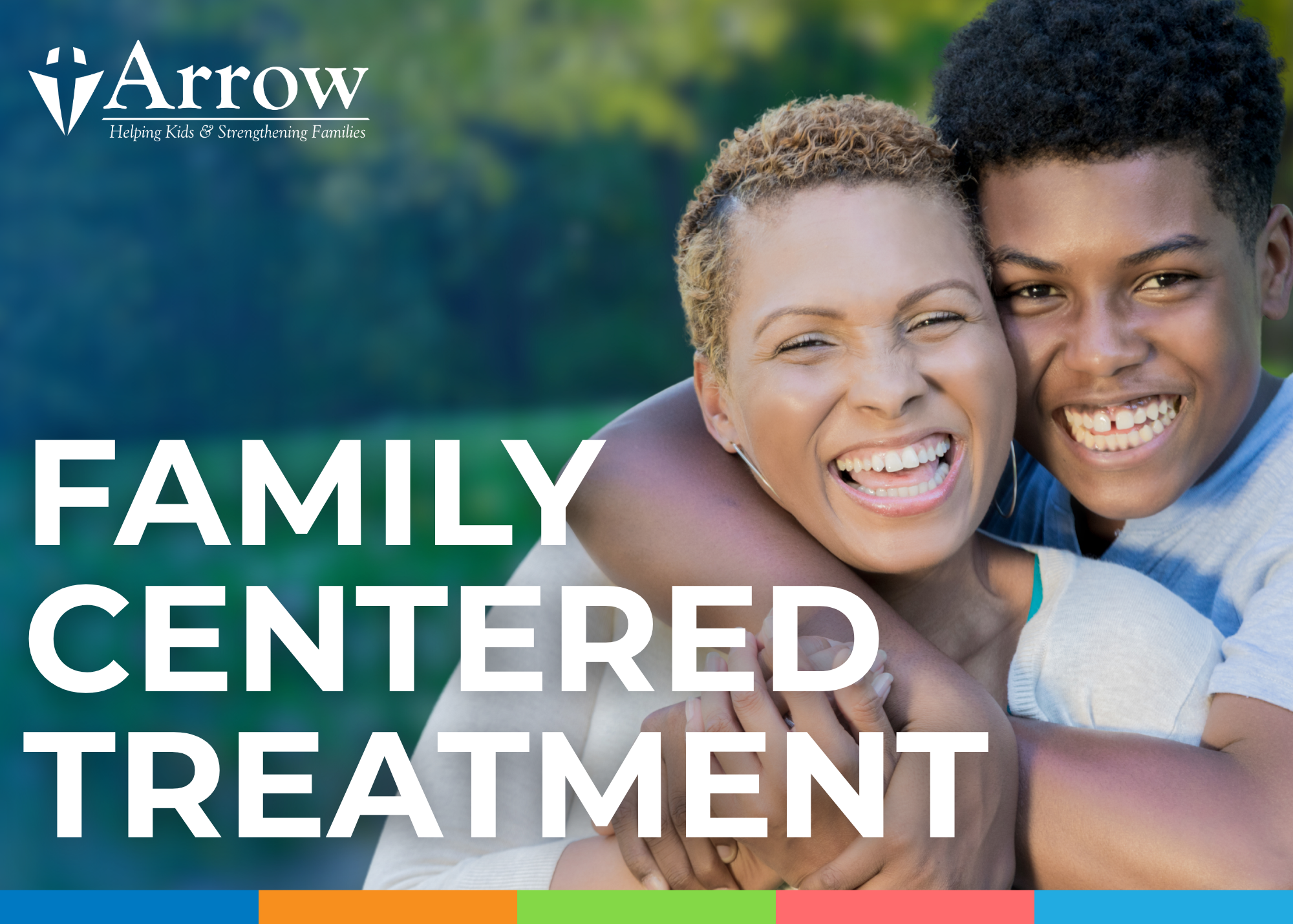
Family Centered Treatment (FCT) is an evidence and home-based treatment which reduces the need for out-of-home placements. It has been refined based on research, experience and effectiveness, meeting families where they are to help them build a path forward.
An Arrow family is showing us how the process of Family Centered Treatment can transform a household to help them find new, solid ground.
Their path began in a place of uncertainty.
A single caregiver had opened her home and heart to three children, her 13-year-old biological grandchild and two siblings, ages 10 and 11. As a fictive kin caregiver, she stepped in to provide stability.
The family was navigating escalating behavioral challenges, trauma symptoms and constant emotional overwhelm. The youngest child, a survivor of sexual abuse, struggled deeply with feelings of safety.
Communication often broke down.
Daily life felt unpredictable as the caregiver was doing everything she could. Still, it was becoming too much to manage alone.
When Family Centered Treatment entered the home, trust did not come easily.
The family had worked with systems before. They had been let down before. The caregiver questioned whether this would be any different. The children kept their distance, unsure of what to expect.
Instead of rushing in with solutions, FCT practitioners take a different approach. They listen, observe and create a space for each family member to be heard without judgment.
Visit by visit, something began to shift.
The caregiver and children noticed the consistency, patience and compassion. The children began to open up, testing what it meant to trust someone who was there to support them, not control them.
“FCT meets families where they are and walks alongside them through each step of the process,” an Arrow spokesperson said.
Progress showed up in small ways. Mornings became calmer, arguments between siblings happened less often. The caregiver began using new parenting techniques with growing confidence. The youngest child started to show signs of feeling emotionally safe.
The caregiver shared that during a recent family outing, something felt different. The children were not arguing, but were laughing. They used their own money to buy gifts for one another as well.
“It made me happy,” the caregiver said.
It was more than a good day. It was a glimpse of what the family could become.
Over time, the changes deepened. The children began communicating more respectfully, using coping skills instead of acting out. Trust, once fractured, began to rebuild, allowing their home to feel lighter.
The caregiver, who once felt overwhelmed, began to feel new confidence.
“This kind of progress reflects what can happen when families are supported in their own environment with tools that work for them,” an Arrow spokesperson said.
Today, the family continues to move forward.
Behavioral challenges have decreased. Trauma symptoms are more manageable. Communication is improving. Trust is still being rebuilt, but it is no longer out of reach.
What began as a home filled with stress and uncertainty is becoming a place of connection and stability.
Family Centered Treatment is not just helping this family stay together. It is helping them grow stronger together.